1300 710 863 | hello@aboutbusinessbooks.com.au
1300 710 863 | hello@aboutbusinessbooks.com.au


Nobody starts a business because they love bookkeeping. Most people start because they’re good at a trade, or a service, or a product, and the financial side is something they figure out as they go. That’s completely normal, but a few basics, understood early, save a lot of stress later.
Profit and cash are not the same thing. This trips up more new business owners than almost anything else. You can have a genuinely profitable month on paper and still not have enough money in the account to cover your bills, because a chunk of that profit is sitting in invoices nobody’s paid you yet. Profit is what you’ve earned. Cash is what’s actually in the bank. Both matter, but they answer different questions.
Keep business and personal money separate, from day one. Even as a sole trader with no legal requirement to do so, running everything through one account makes it almost impossible to see how the business is actually performing, and it makes tax time significantly harder than it needs to be. Open a separate account before you take your first payment, not after six months of trying to untangle it.
GST is money you’re collecting, not money you’ve earned. If you’re registered for GST, roughly a tenth of what a customer pays you isn’t yours, it’s the ATO’s, and you’re just holding it until your BAS is due. The businesses that get caught out are the ones that spend it as if it were regular income and then don’t have it when the bill comes.
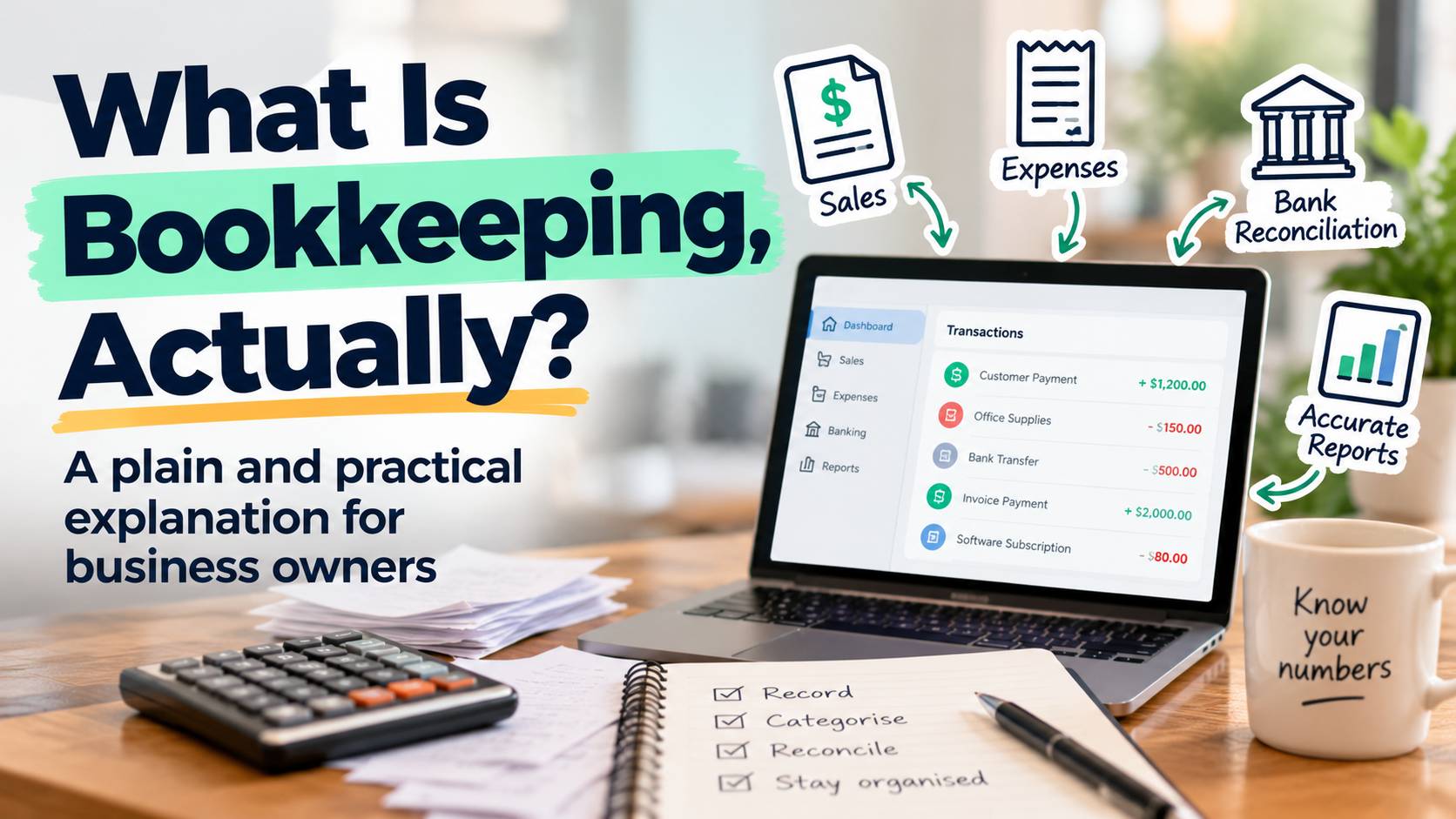
Every transaction needs to go somewhere specific. When you’re starting out, it’s tempting to let miscellaneous expenses pile up in a general category because sorting them properly feels like a job for later. Later usually turns into never, and by BAS or tax time you’re trying to remember what a transaction from four months ago actually was. Categorising as you go, even roughly, is far less work than reconstructing it after the fact.
A basic understanding of your numbers is a business skill, not an accounting skill. You don’t need to become a bookkeeper. You do need to be able to look at your bank balance and your BAS provision and know, roughly, where you stand. That’s the difference between making decisions with actual information and making decisions on vibes.
None of this is complicated once someone walks you through it properly, which is really the point. Most of the financial stress in a new business comes from not knowing rather than from the numbers themselves being bad.
If you’re setting up a new business and want the financial side sorted properly from the start, rather than untangled later, get in touch and we’ll help you set it up right the first time.