What Is Cloud Accounting Software?

Cloud Accounting is designed to make your life easier

We are experts in multiple cloud-based accounting software platforms and apps.
Our Central Coast team takes the guesswork out of your financials by helping you choose, set up, and manage the most suitable system for your growing business.
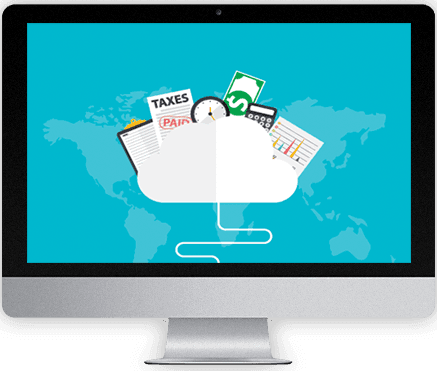
Illustration on a desktop monitor showing financial icons emerging from a cloud over a global map, visualizing modern Cloud Accounting efficiency.

Our Software Partners

Find out more about our chosen software partners: Xero, QuickBooks, and Dext.
(Plus, browse our handy Xero & QuickBooks Resources to get up to speed faster!)

Expert Setup for Cloud Accounting Software & Bookkeeping

Transitioning to cloud accounting software is one of the smartest operational decisions you can make for your business.
It is designed to make your life easier, your data more secure, and your financial reporting entirely transparent.
At About Business Bookkeeping, we are experts in multiple online platforms and integrations.
Our Central Coast team takes the guesswork out of your financials by helping you choose, implement, and manage the most suitable system for your growing business.

How the Platforms Compare

Choosing cloud accounting software is one of the more consequential decisions a small business makes — switching later means migrating your data and retraining your team, so it's worth getting right the first time. Here's a straight comparison of the platforms we set up and support most often, followed by how to actually make the switch.
Xero

Xero

Beautiful, easy-to-use software designed for small to medium businesses, with strong bank feeds and a wide range of app integrations.

quickbooks 1x1 1

QuickBooks

Powerful financial management and payroll tools.

dext

Dext

The ultimate receipt tracking and data extraction integration.


Why Move to Cloud Accounting at All
If you’re currently on desktop software or a spreadsheet, the practical differences are immediate: your numbers are current instead of last-updated-whenever, your bank transactions flow in automatically instead of manual entry, and your bookkeeper or accountant can work directly in your file instead of you emailing exports back and forth.


accurate business picture 180x180 1

It saves you time

Enjoy automatic bank feeds, simple reporting, and online dashboards with no more manual data entry. You won’t have to waste time trying to find receipts or organize paperwork—professional cloud bookkeeping handles it for you!

on the go

You’ll gain the ability to run your business on the go

Access your real-time financial data, reports, and the metrics you need to make critical business decisions from anywhere, anytime, and on any device.

real time data

It lets you access real-time financial data

Modern cloud-based accounting software includes online invoicing. This allows you to send invoices to customers seamlessly and follow them up automatically to improve your cash flow.

accurate business picture 180x180 1

Gain an accurate picture of your business

How can you make good decisions if you don’t have all the right information? Quickly access custom dashboards so you understand exactly how your business is performing.

real time data

Improve cashflow, get paid faster and grow your business

Cloud accounting technology includes online invoicing allows you to send invoices to customers quickly and seamlessly, and follow them up automatically. Modern accounting platforms help you improve your cash flow and get paid quicker – what’s not to love?

work collaboratively

Work collaboratively with your accountant and bookkeeper

Grant our team access to your file, and you can expect real-time advice and compliance support in the background. You can also collaborate with your internal staff by restricting user access exactly as you need.

streamline your business

Streamline your business

Going paperless is easy with cloud technology. Use your phone to capture receipts and manage expenses instantly. Best of all, because you are working on a platform with multiple layers of security, your data is safely backed up even if your laptop is lost or stolen.
security icon

It’s secure

Working in the cloud means you’re working on a platform with multiple layers of security. If your phone, tablet or laptop is broken, lost or stolen, all your data is safely backed up in the cloud.

What Is Cloud Accounting Software?

Cloud accounting software stores your financial data online instead of on a single computer. Rather than installing a program on one desktop and hoping nobody else needs it at the same time, you log in through a browser or app, from any device, whenever you need to. Your data updates in real time and is backed up automatically, rather than living on one hard drive that could fail.

Cloud Accounting vs Traditional Desktop Software

The old way of doing the books meant one file, on one computer, updated by one person. If your bookkeeper needed to see your numbers, you emailed a file back and forth and hoped you were both looking at the same version. Cloud accounting fixes this – you, your bookkeeper, and your accountant all work from the same live file. Bank transactions flow in automatically instead of being typed in by hand, and your reports are always current, not “as of whenever someone last updated the spreadsheet.”

What to Look for in Cloud Accounting Software

Not every cloud accounting package is built the same way. For a small business, the features that actually matter are:

  • Automatic bank feeds, so transactions appear without manual entry
  • Built-in BAS and GST reporting for Australian requirements
  • Payroll and Single Touch Payroll (STP) compliance
  • The ability for your bookkeeper or accountant to log in directly, rather than working from exports
  • Mobile apps for invoicing and expense capture on the go
  • Multi-user access with different permission levels

Want a full breakdown of specific platforms? See our comparison of the top cloud accounting software options for Australian small businesses.

Is Cloud Accounting Software Secure?

This is one of the most common questions we get. Reputable platforms like Xero, MYOB, and QuickBooks use bank-level encryption and store your data on secure servers with regular backups – generally more secure than a single laptop that could be lost, stolen, or simply stop working. The bigger risk usually is not the software itself but weak passwords or skipping two-factor authentication, so make sure that is switched on.

How Much Does Cloud Accounting Software Cost?

Most cloud accounting platforms run on a monthly subscription, typically starting somewhere in the $30 to $70 range for a small business plan, scaling up depending on how many users and how much payroll or reporting you need. On top of the software cost, most businesses still want someone who understands the numbers behind it – which is where a bookkeeper or Registered BAS Agent comes in.

Frequently Asked Questions

Xero, MYOB, and QuickBooks all work well in Australia and each have BAS and STP built in. The right one depends on your industry and existing systems – see our detailed comparison for a full breakdown.

Yes. Historical data can generally be migrated across, though the process varies by platform. Our guide to switching to cloud accounting walks through what to expect.
The software handles data entry and reporting, but it does not replace someone who understands whether the numbers are actually right. Most of our clients use cloud software alongside ongoing bookkeeping support, not instead of it.
Yes – it is particularly useful for tradies, since you can invoice from a job site and see your numbers without waiting until you are back at a desk.

What Is Cloud Accounting Software?

Cloud accounting software stores your financial data online instead of on a single computer. Rather than installing a program on one desktop and hoping nobody else needs it at the same time, you log in through a browser or app, from any device, whenever you need to. Your data updates in real time and is backed up automatically, rather than living on one hard drive that could fail.

Cloud Accounting vs Traditional Desktop Software

The old way of doing the books meant one file, on one computer, updated by one person. If your bookkeeper needed to see your numbers, you emailed a file back and forth and hoped you were both looking at the same version. Cloud accounting fixes this – you, your bookkeeper, and your accountant all work from the same live file. Bank transactions flow in automatically instead of being typed in by hand, and your reports are always current, not "as of whenever someone last updated the spreadsheet."

What to Look for in Cloud Accounting Software

Not every cloud accounting package is built the same way. For a small business, the features that actually matter are:

  • Automatic bank feeds, so transactions appear without manual entry
  • Built-in BAS and GST reporting for Australian requirements
  • Payroll and Single Touch Payroll (STP) compliance
  • The ability for your bookkeeper or accountant to log in directly, rather than working from exports
  • Mobile apps for invoicing and expense capture on the go
  • Multi-user access with different permission levels

Want a full breakdown of specific platforms? See our comparison of the top cloud accounting software options for Australian small businesses.

Is Cloud Accounting Software Secure?

This is one of the most common questions we get. Reputable platforms like Xero, MYOB, and QuickBooks use bank-level encryption and store your data on secure servers with regular backups – generally more secure than a single laptop that could be lost, stolen, or simply stop working. The bigger risk usually is not the software itself but weak passwords or skipping two-factor authentication, so make sure that is switched on.

How Much Does Cloud Accounting Software Cost?

Most cloud accounting platforms run on a monthly subscription, typically starting somewhere in the $30 to $70 range for a small business plan, scaling up depending on how many users and how much payroll or reporting you need. On top of the software cost, most businesses still want someone who understands the numbers behind it – which is where a bookkeeper or Registered BAS Agent comes in.

Frequently Asked Questions

Which cloud accounting software is best for a small business in Australia?

Xero, MYOB, and QuickBooks all work well in Australia and each have BAS and STP built in. The right one depends on your industry and existing systems – see our detailed comparison for a full breakdown.

Can I switch from desktop software to cloud accounting without losing my data?

Yes. Historical data can generally be migrated across, though the process varies by platform. Our guide to switching to cloud accounting walks through what to expect.

Do I still need a bookkeeper if I use cloud accounting software?

The software handles data entry and reporting, but it does not replace someone who understands whether the numbers are actually right. Most of our clients use cloud software alongside ongoing bookkeeping support, not instead of it.

Is cloud accounting software suitable for tradies and small trade businesses?

Yes – it is particularly useful for tradies, since you can invoice from a job site and see your numbers without waiting until you are back at a desk.

Ready to Modernize Your Financial Systems?

If you are tired of desktop-bound files and manual data entry, it is time to upgrade. A reliable cloud accounting software setup will give you back your time so you can focus on growing your business. Comparing your options? See our roundup of the top cloud accounting software. Already decided and ready to make the move? Our step-by-step guide to switching to cloud accounting walks you through it.